Resources
Glow For Hope™ is dedicated to equipping individuals with the knowledge and tools to recognize and respond to signs of suicide. We understand that addressing the topic of suicide can be challenging, but it is a critical step in fostering a supportive community and saving lives. Here, you will find resources aimed at helping you identify the warning signs, understand who may be at risk, and learn effective ways to engage in conversations with those who may be contemplating suicide. Our mission is to empower you with the information and skills needed to make a positive impact, fostering a community where open dialogue, empathy, and support can thrive. Together, we can work towards creating a world where everyone feels heard, valued, and connected.
Glow For Hope offers a growing library of free mental health resources for parents, caregivers, teens, athletes, coaches, and educators. Whether you’re looking for practical tools, local help, or crisis support — you’re in the right place.

Glow For Hope Resource Hub
Free guides, conversation tools, safety planning resources, grounding exercises, and more — organized for parents, teens, athletes, coaches, and educators.
Explore the Hub →
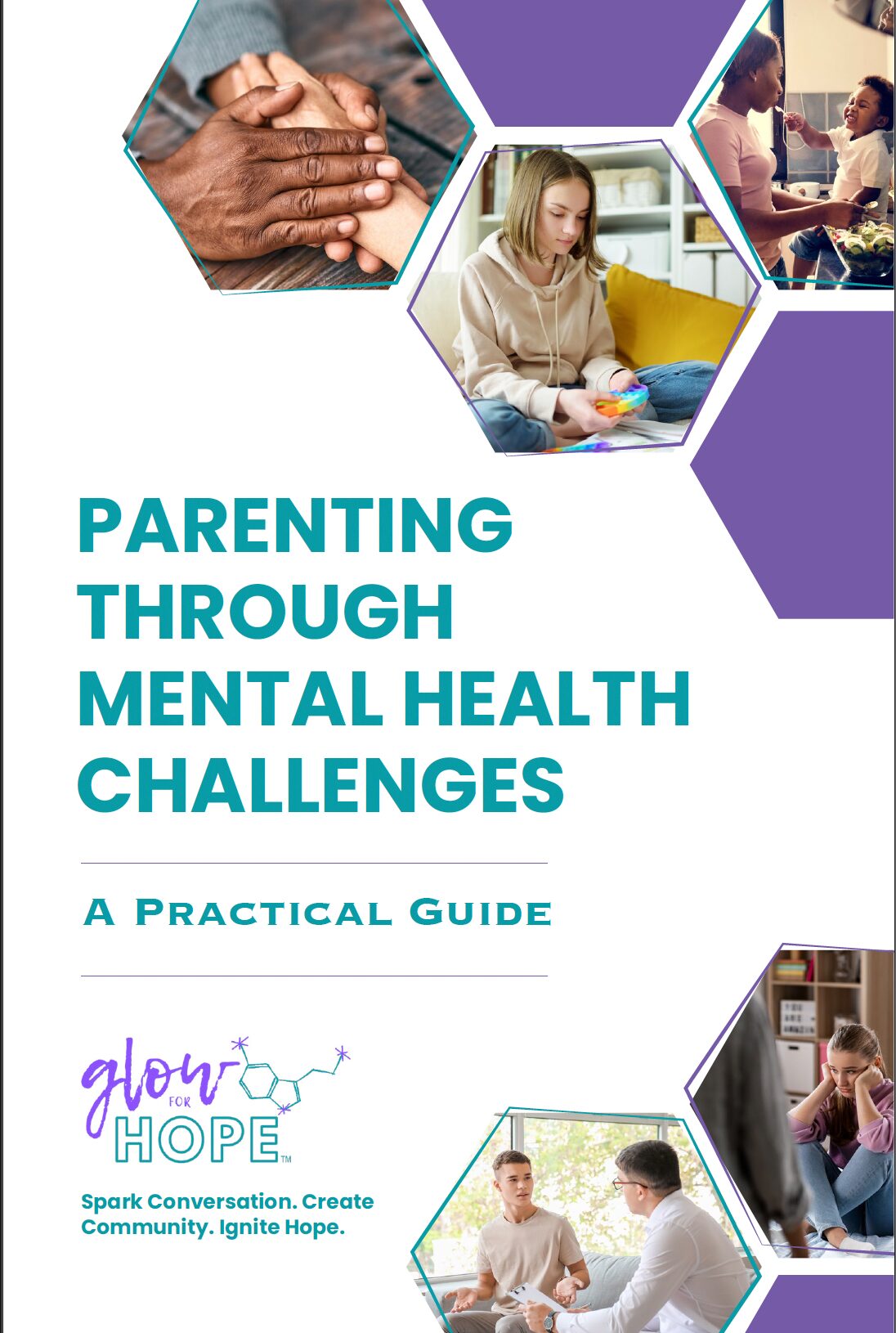
Parenting Through Mental Health Challenges: A Practical Guide
A free, comprehensive guide for parents and caregivers navigating youth mental health challenges. Written in plain language — not just what to look for, but what to do next.
Mental Health Help Directory
Looking for local providers in Southwestern Illinois and St. Louis, national crisis lines, or international support resources? Our curated directory is your starting point.
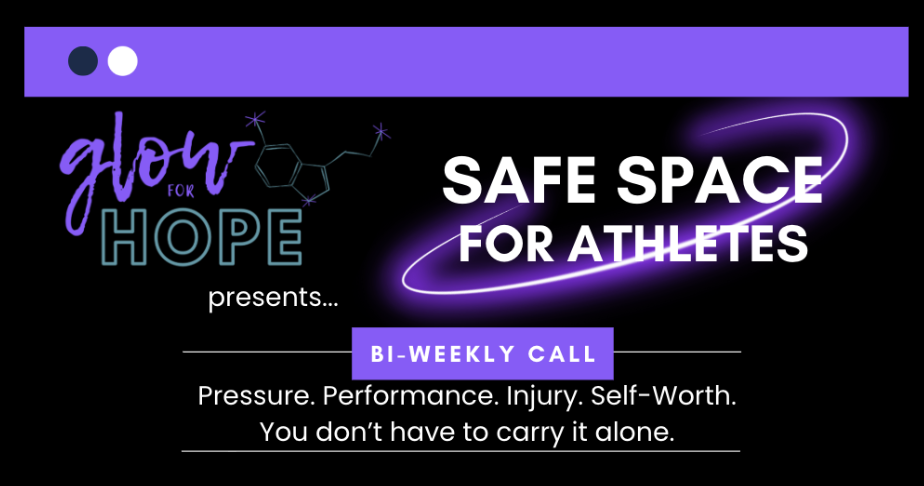
Safe Space For Athletes
A free bi-weekly virtual call for high school and college athletes led by former athlete and coach Matthew Benson. Pressure. Performance. Injury. Self-Worth. You don’t have to carry it alone.
This is not therapy or crisis counseling.
No One Takes Their Life for a Single Reason
Suicide typically emerges when a combination of stressors and health challenges converge, leading to feelings of hopelessness and despair. Depression stands out as the primary condition linked to suicide, often going unnoticed or untreated.
Individuals effectively managing their mental health conditions usually continue to participate fully in life. However, conditions such as depression, anxiety, and substance use issues, particularly when left unattended, elevate the risk of suicide.
Risk Factors
- Mental Health Conditions: Depression, bipolar disorder, schizophrenia.
- Previous Suicide Attempts: Individuals with a history of suicide attempts are at higher risk.
- Family History: A family history of suicide or mental health conditions.
- Substance Abuse: Drug or alcohol misuse can contribute to increased risk.
Most people who end their lives exhibit one or more warning signs, either through what they say or what they do.
Suicide Warning Signs
Behavioral
- withdrawal from friends and family
- giving away possessions
- searching online for ways to end their life
- sleeping too much or too little
- acting aggressively
- increased use of alcohol or drugs
- fatigue
Verbal
- feelings of hopelessness
- talking about death or suicide
- feeling like a burden
- feeling trapped
- having no reason to live
Mood
- loss of interest in participating in anything
- feeling anxious
- irritable
- agitated
- anger or rage
How do you talk to someone about suicide?
-
Talk in Private
-
Take them Seriously
-
Express Concern: Use empathetic and non-judgmental language to show that you care.
-
Active Listening: Give full attention, ask open-ended questions, and validate their feelings.
-
Offer Support: Encourage them to seek professional help and assist in making connections.
-
Avoid Judgment: Create a safe space without blaming or making them feel guilty.
If YOU are the one struggling… Don’t wait for someone to reach out!
- Call or text 988
- Treat yourself like you would treat someone else who needs your help
#BeThe1To
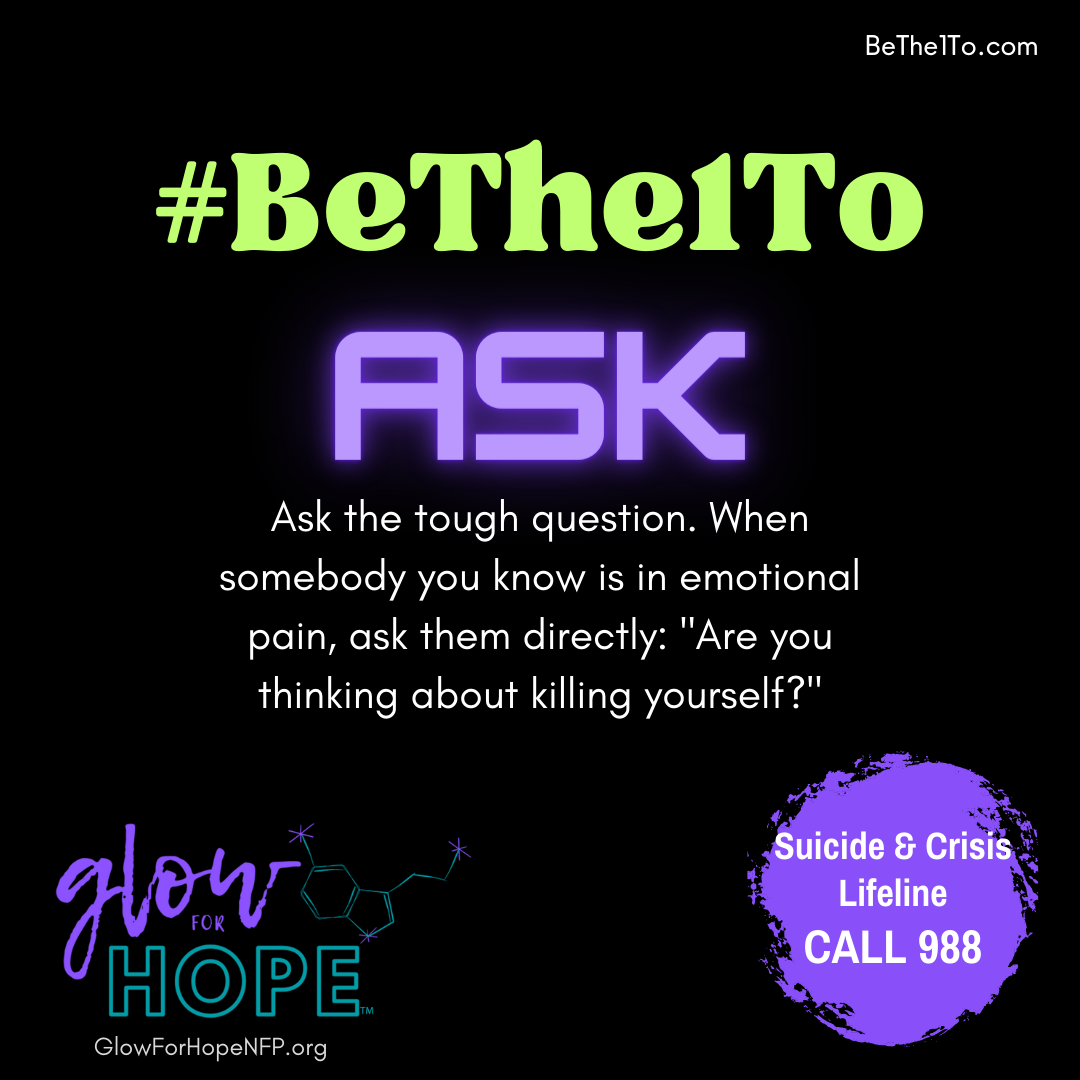
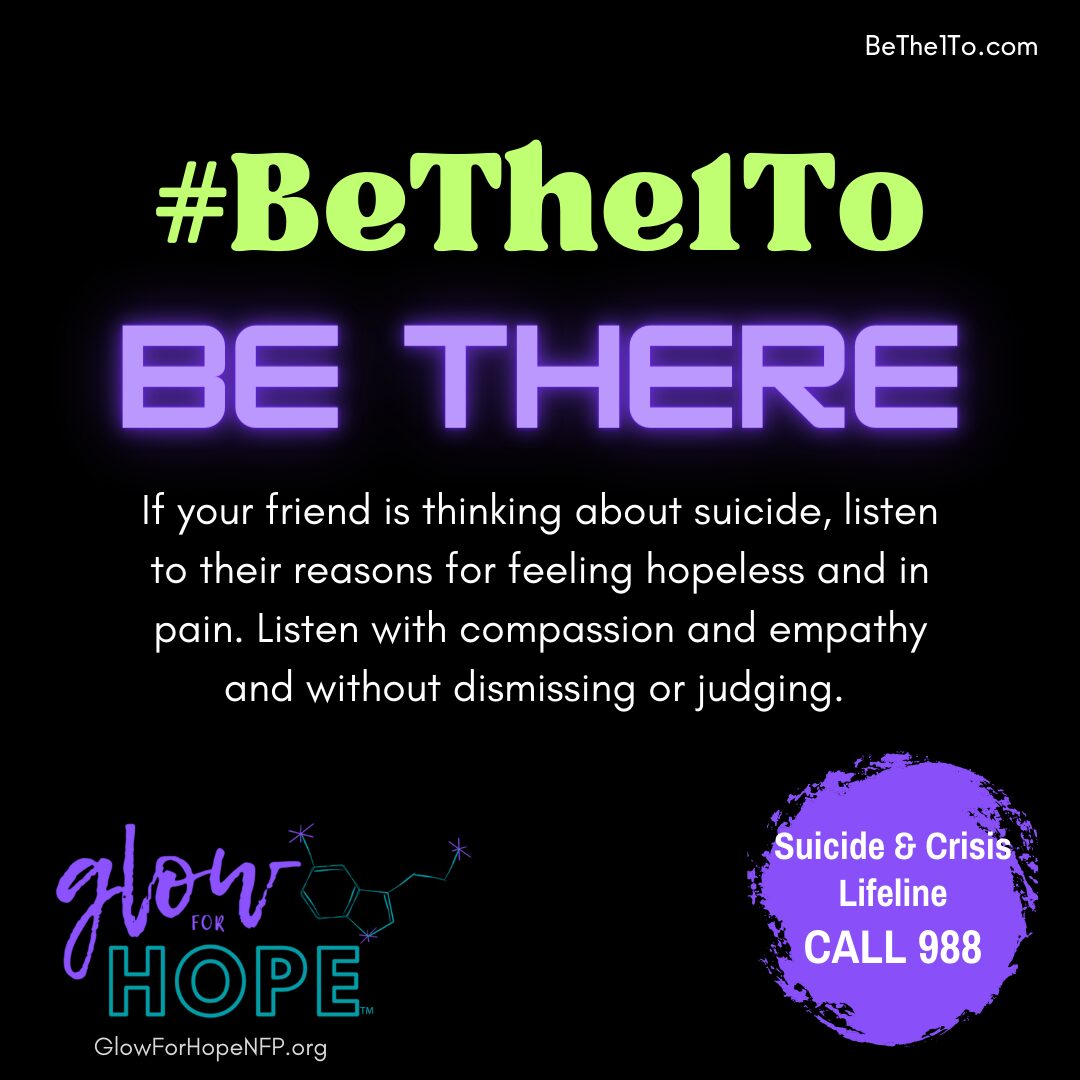
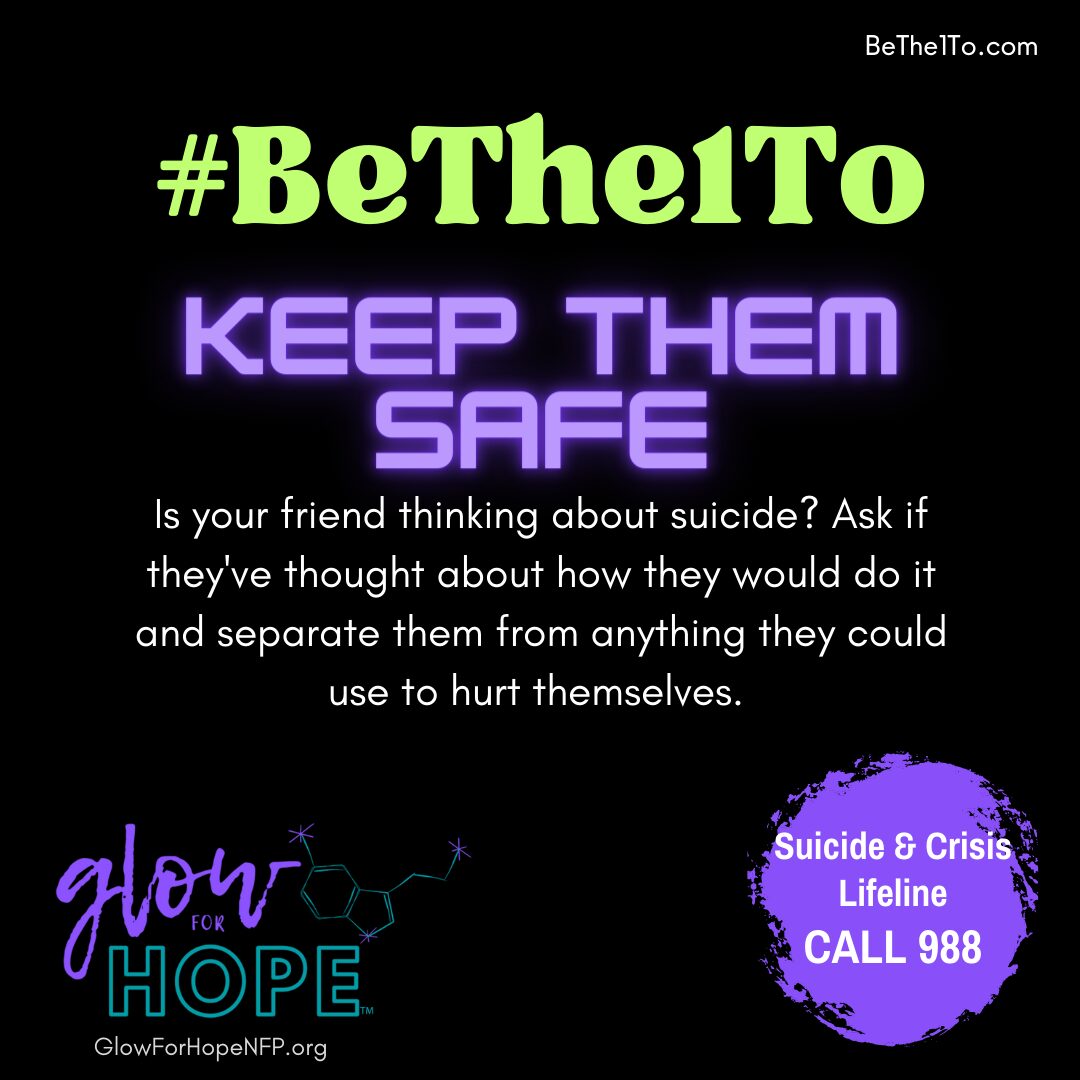
Ask. Be There. Keep Them Safe. Help Them Connect. Follow Up.
These five action steps from the 988 Suicide & Crisis Lifeline give anyone — parent, coach, friend, neighbor — a clear path for helping someone in crisis.